Quick Information
Price: 10,000 KRW (≈ $7)
Location: Twin Tree Tower, Jongno, Seoul
Distance: 300m from Gyeongbokgung & Gwanghwamun
Type: Korean Lunch Buffet
Recommended Time: Around 11:00 AM before lunch rush
Intro – 전주밥차
If you want to experience how Korean office workers eat lunch, visiting a Korean lunch buffet is one of the most interesting food experiences in Seoul.
Unlike hotel buffets, Korean lunch buffets are simple, affordable, and filled with homemade-style dishes. These restaurants are very popular with office workers because they offer a quick and satisfying meal with many different side dishes.
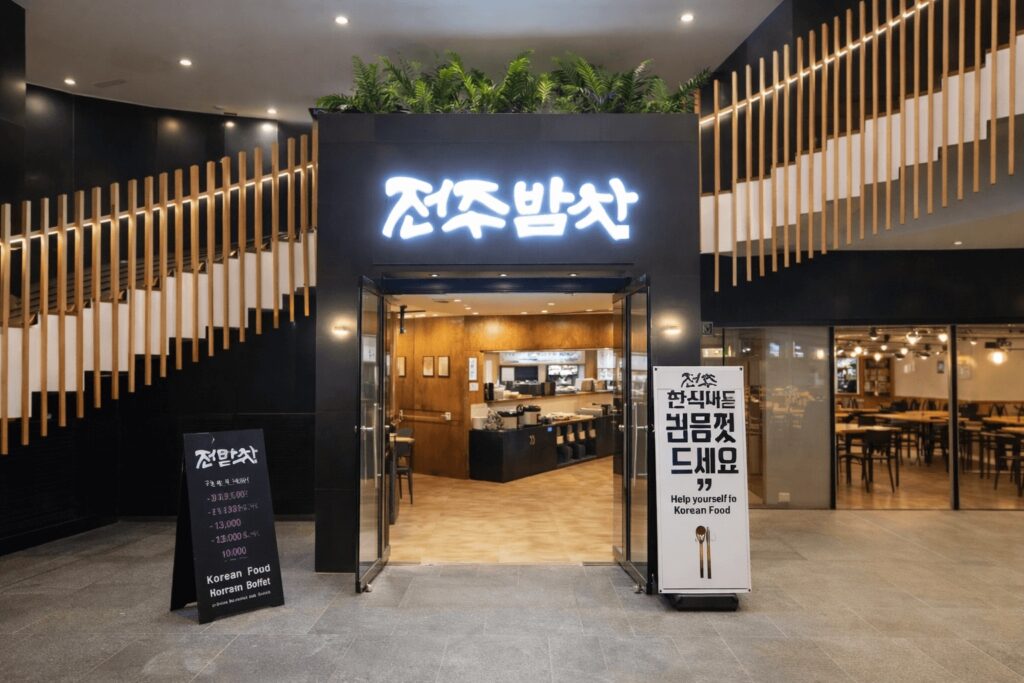
One popular buffet in the Jongno area is Jeonju Bapcha, located very close to Gyeongbokgung Palace and Gwanghwamun Square. The restaurant is about 300 meters walking distance from these famous landmarks.
For around 10,000 KRW (about $7), visitors can enjoy a variety of Korean dishes and experience everyday Korean dining culture.
Location
Jeonju Bapcha is located in the Jongno business district, one of the most historic areas in Seoul.
The restaurant is inside Twin Tree Tower, making it convenient to visit while exploring the historic center of the city.
Address
Twin Tree Tower A Building B1F
6 Yulgok-ro, Jongno-gu, Seoul
Nearest Subway
Anguk Station Exit 6 – about 5 minutes walking distance
Distance from famous landmarks
Gyeongbokgung Palace – about 300m walking distance
Gwanghwamun Square – about 300m walking distance
Nearby attractions Insadong Cultural Street Bukchon Hanok Village
✔ Google Maps Location
👉 View Jeonju Bapcha Location & Walking Directions on Google Maps
Menu and Buffet Style
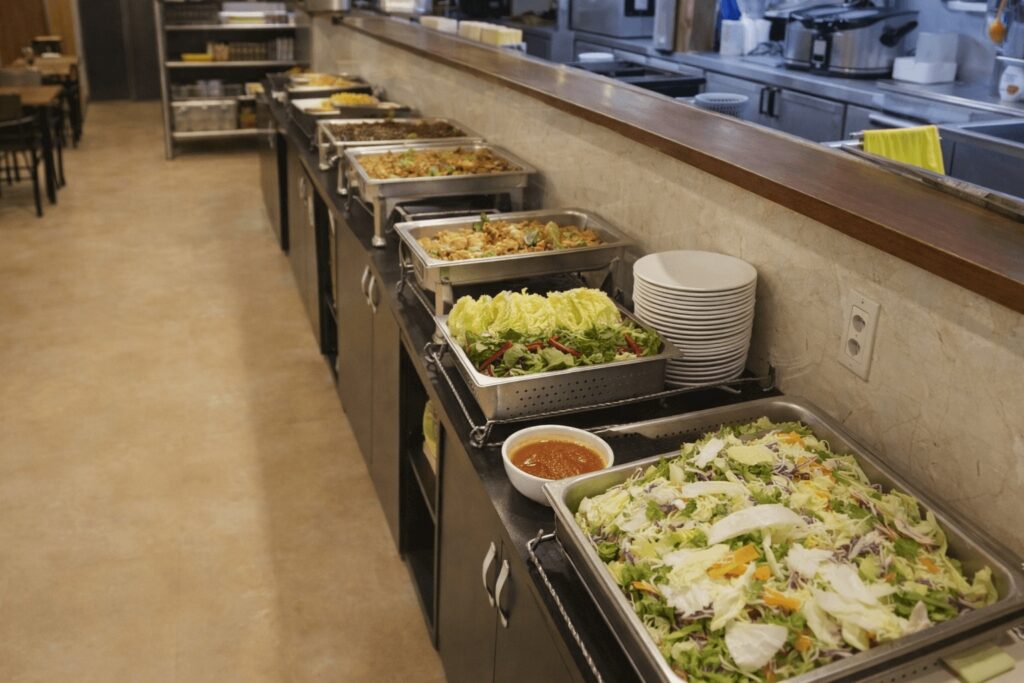
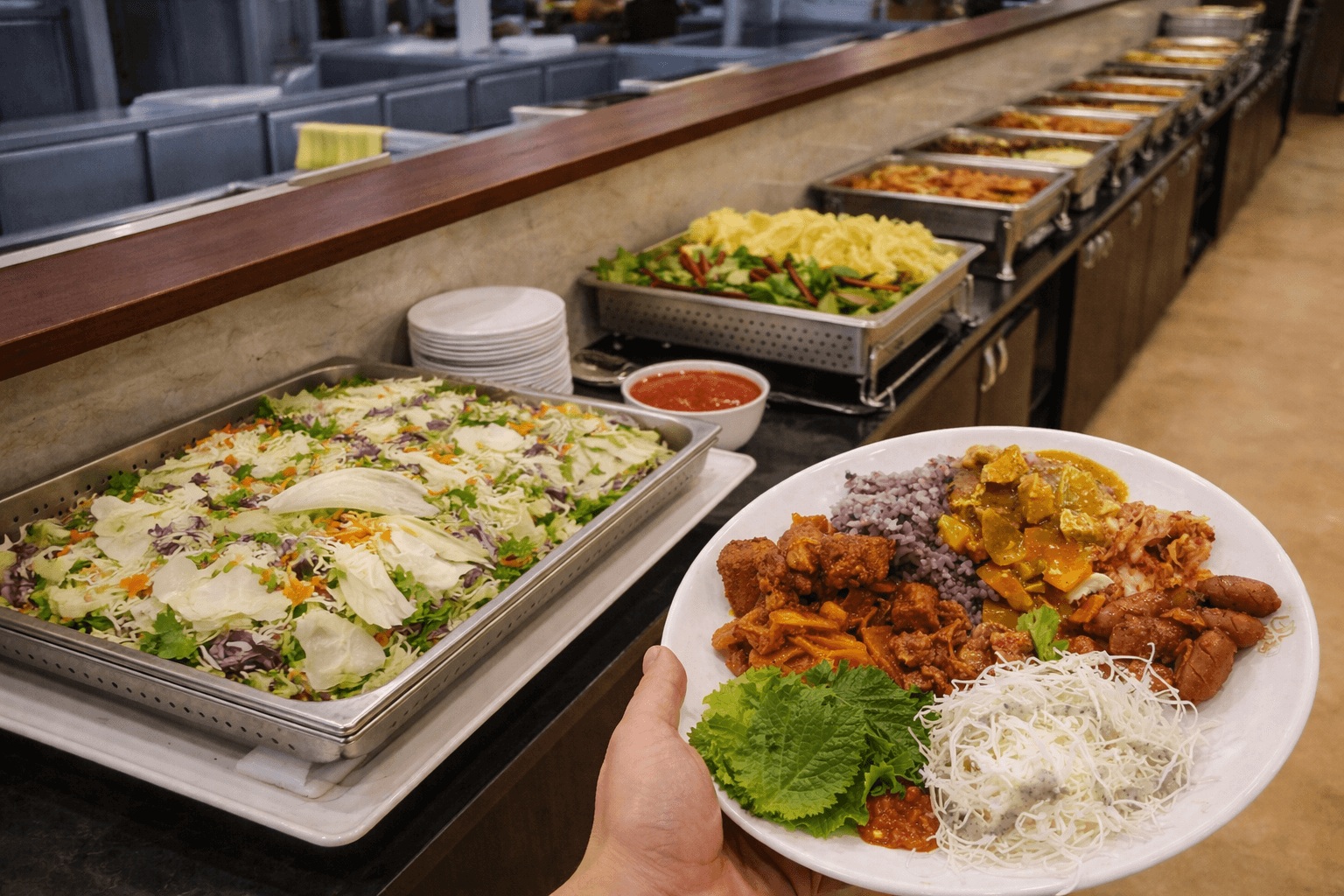
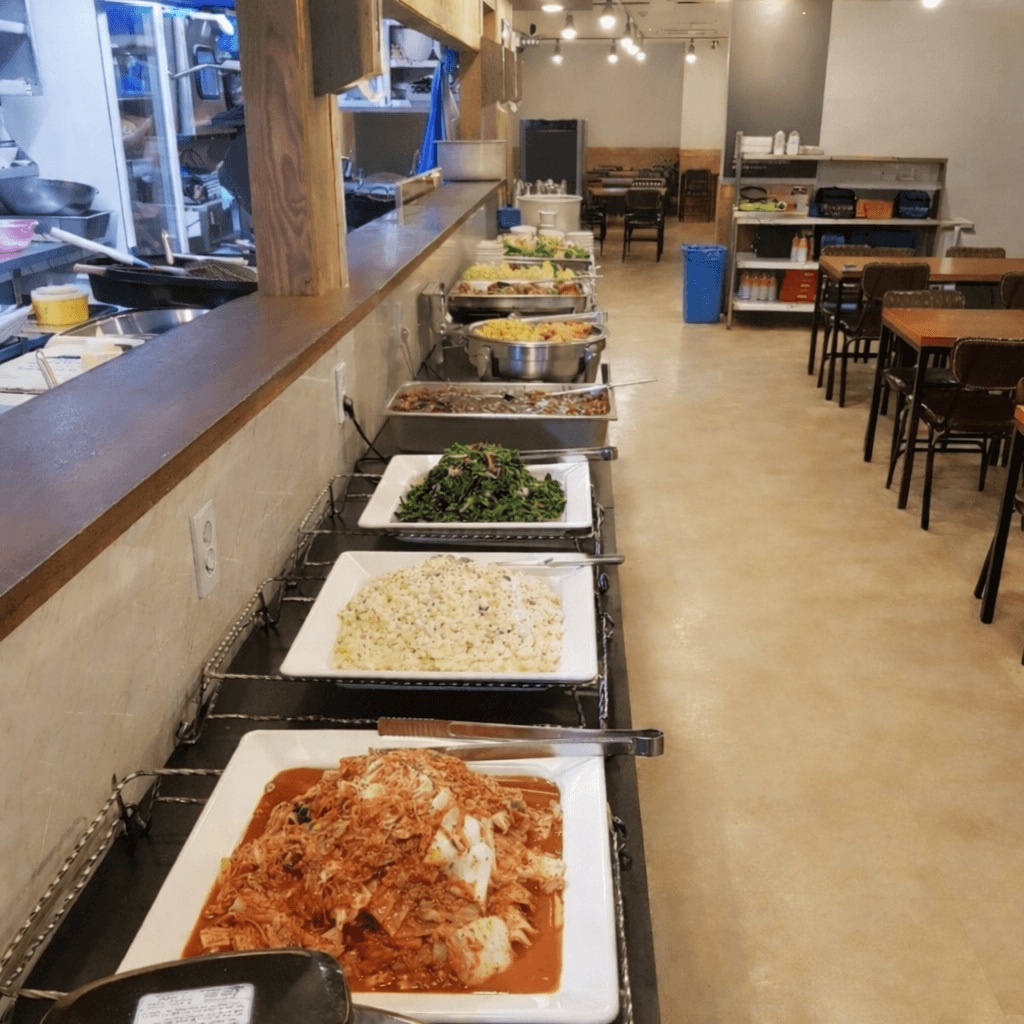
The restaurant operates as a self-service Korean buffet, where visitors can freely choose dishes from the buffet table.
The buffet usually includes dishes such as
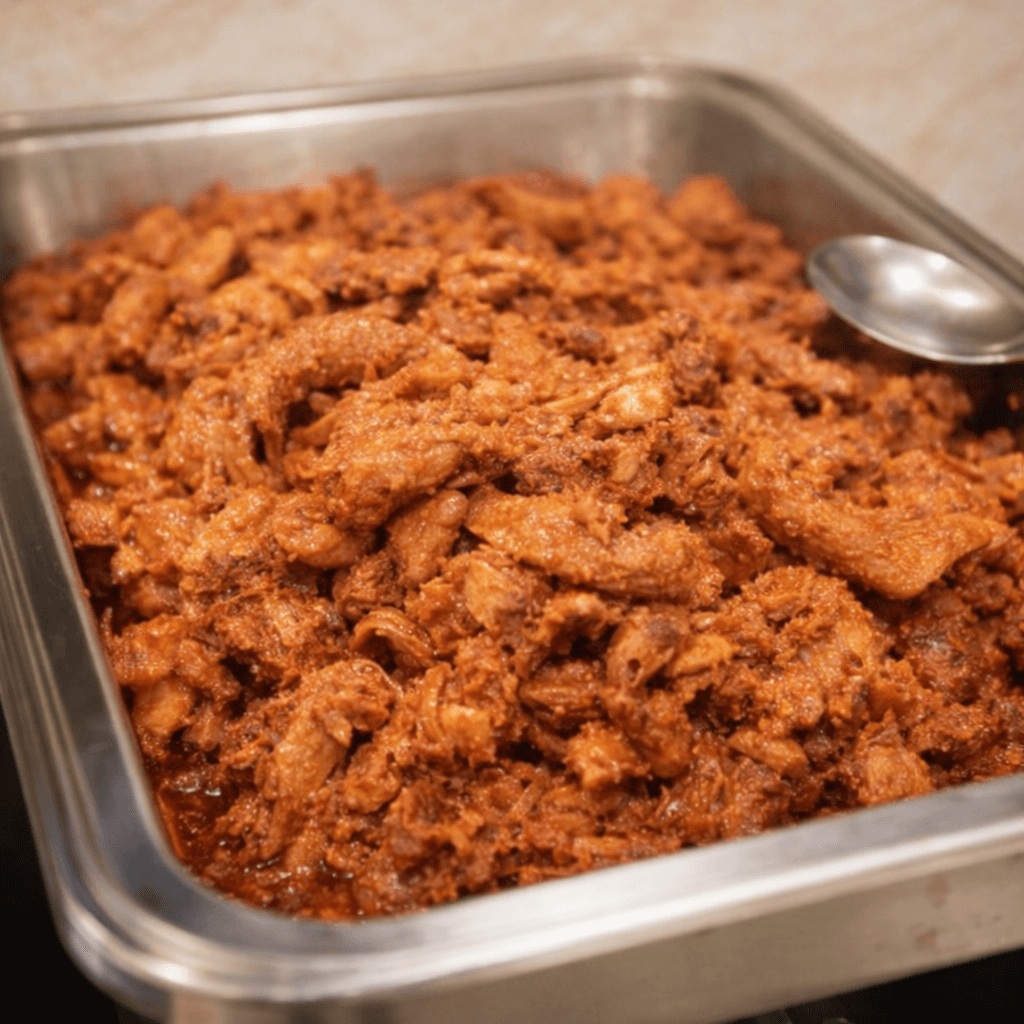
pork bulgogi
spicy gochujang pork bulgogi
fried chicken
sausages
yangnyeom gejang (marinated crab)
There are also many side dishes including
cabbage salad
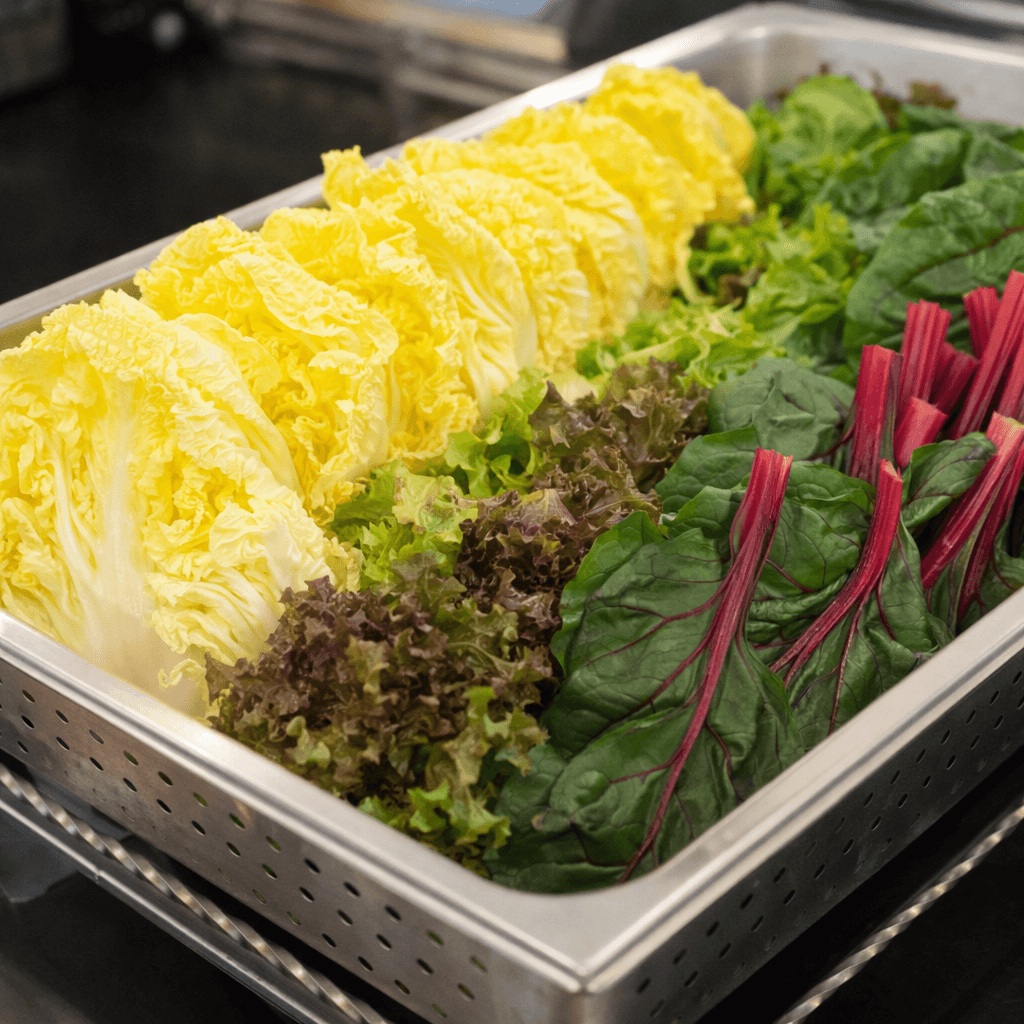
fresh vegetables
kimchi
seasoned vegetable dishes
In addition to Korean dishes, visitors may also find foods such as
spaghetti
curry
jajang sauce
Because of this variety, visitors can try many different Korean flavors in a single meal.
For just 10,000 KRW, the buffet offers an opportunity to taste many types of Korean food at once, which is why it is very popular with local office workers.
Another interesting point is that the main dishes change daily, so regular customers can enjoy slightly different meals each day.
How to Use a Korean Lunch Buffet
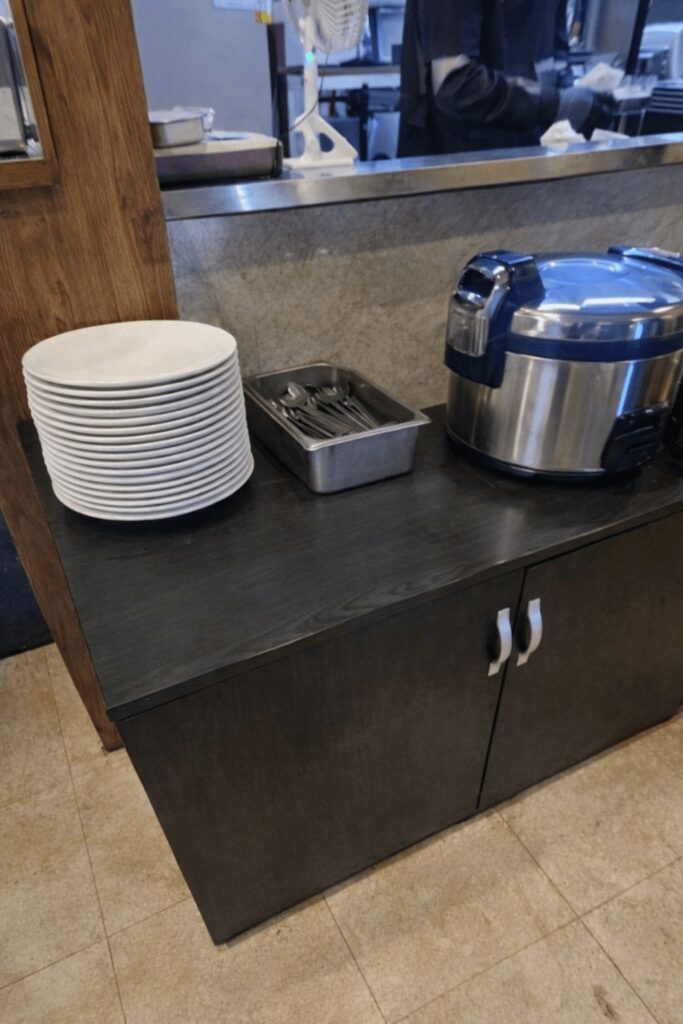
Eating at a Korean lunch buffet is simple, but the process may be unfamiliar for first-time visitors.
First, customers pay at the kiosk near the entrance. After payment, a meal ticket is printed.
Visitors give the ticket to the staff at the entrance and take a round plate and utensils.
Then move along the buffet line and choose the dishes they want. It is recommended to take small portions first so you can try different foods.
If you find something you like, you can go back and take more.
After filling your plate, simply find a seat and enjoy your meal.
Make Your Own Bibimbap
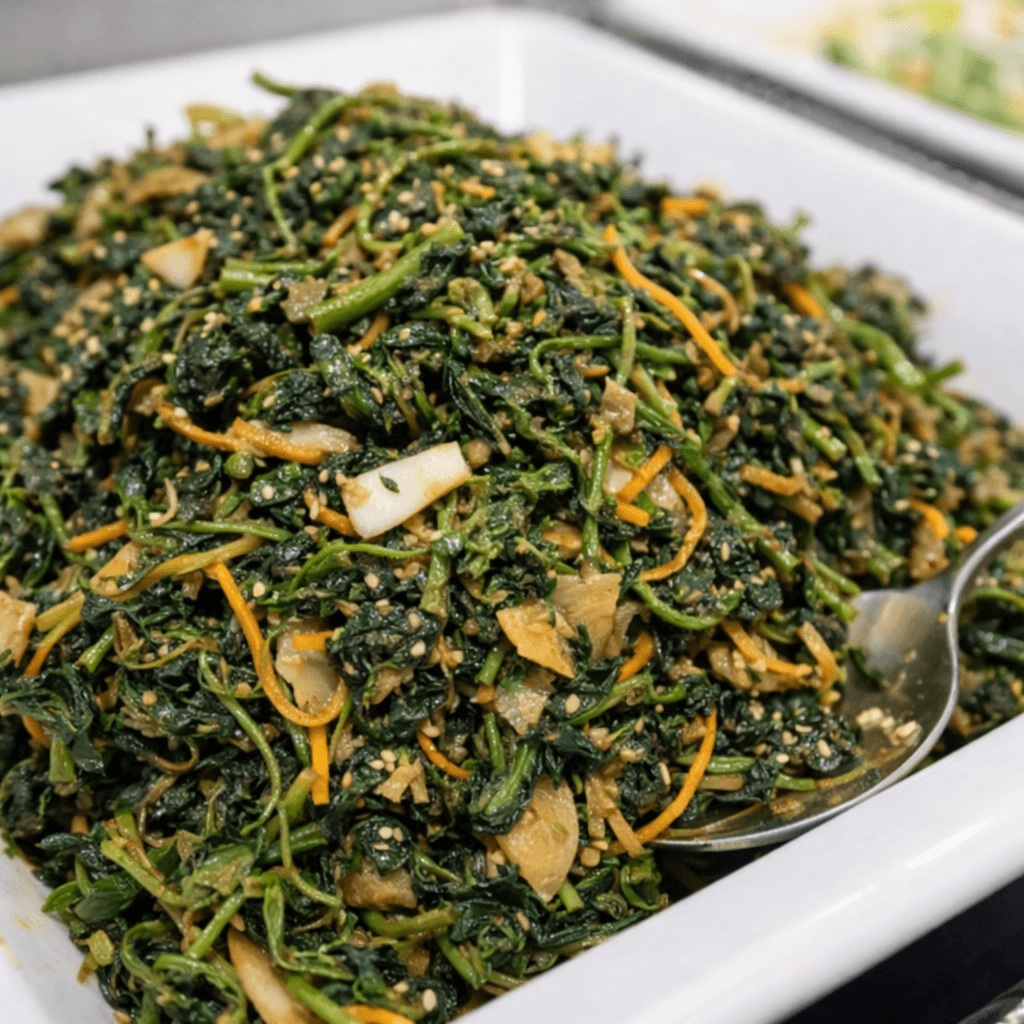
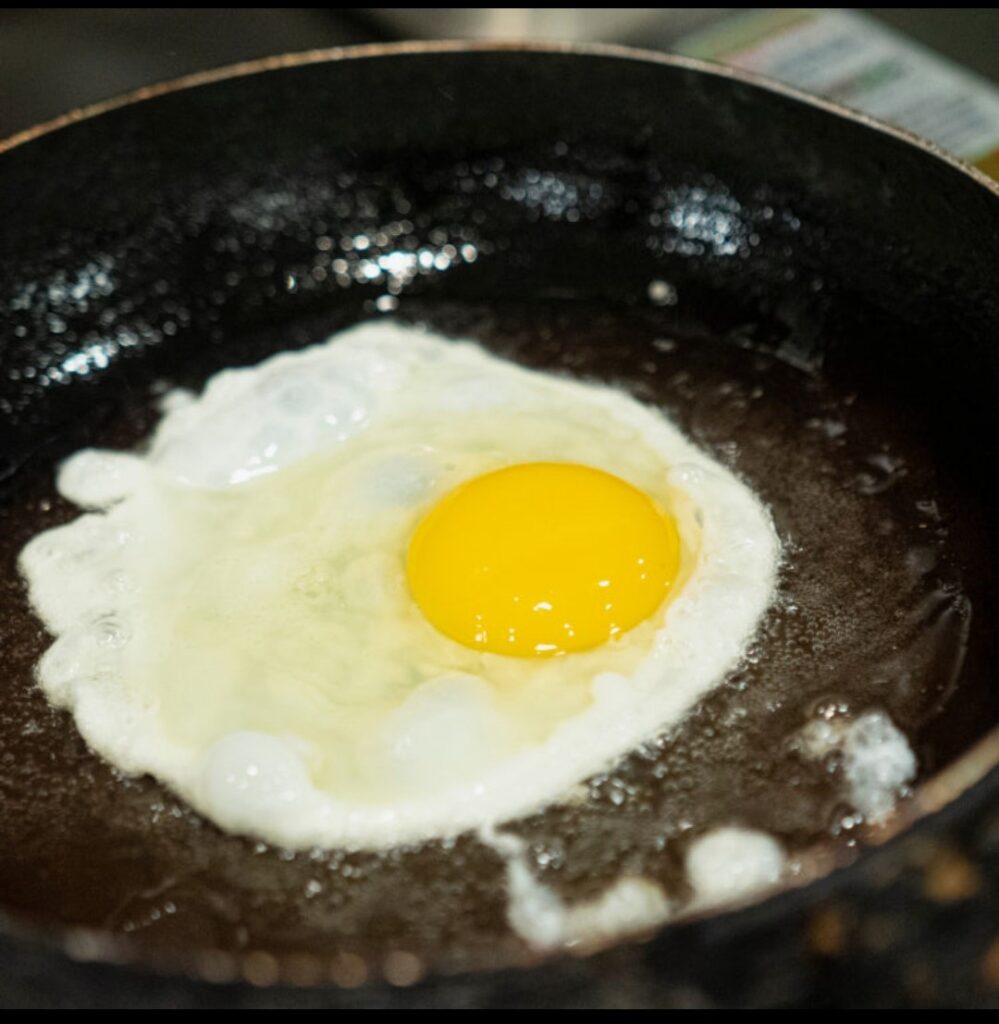
One fun part of eating at a Korean buffet is making your own bibimbap.
Visitors can add rice, vegetables, and side dishes to create their own bowl.
If you want to add a fried egg, there is a self-service egg station.
The restaurant provides mini gas burners, frying pans, cooking oil, and eggs, allowing visitors to cook a fresh fried egg and place it on top of their bibimbap.
This small experience makes the meal more interactive and enjoyable.
Dining Experience
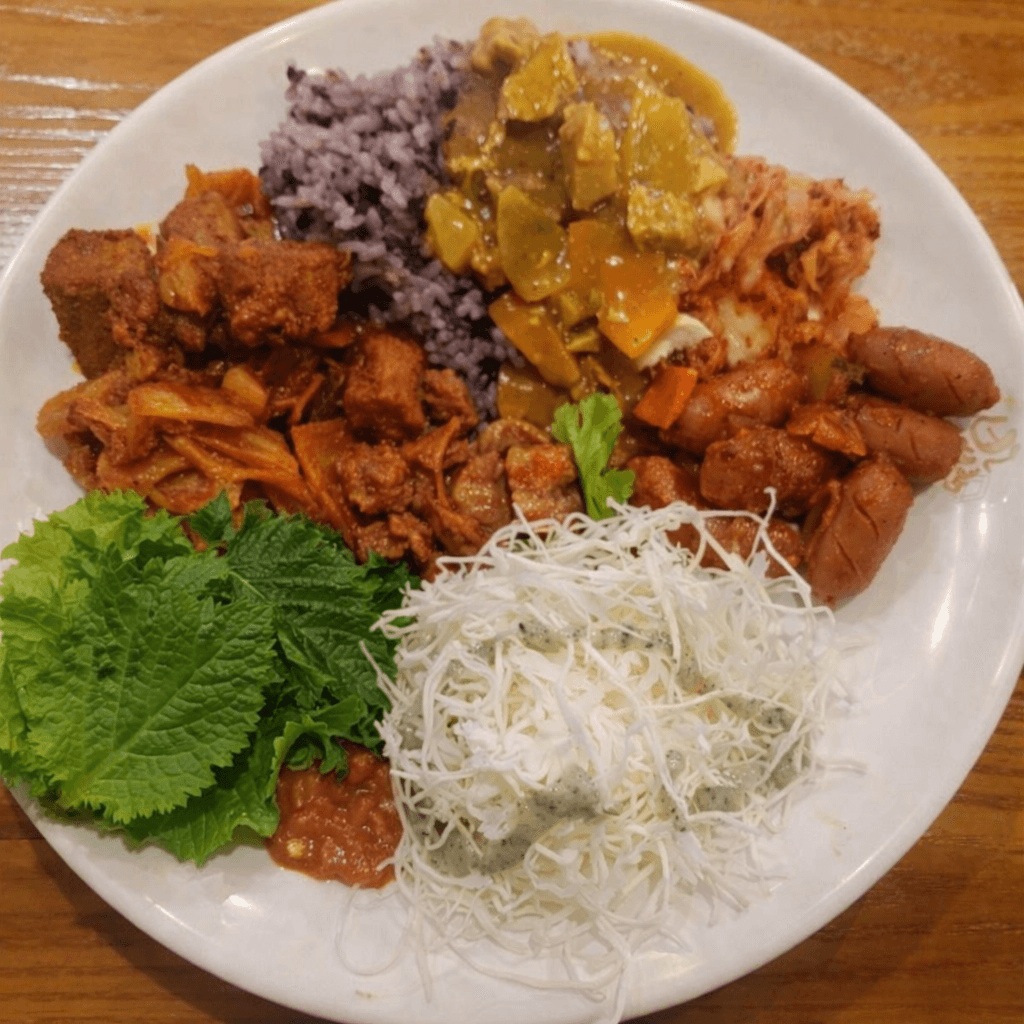
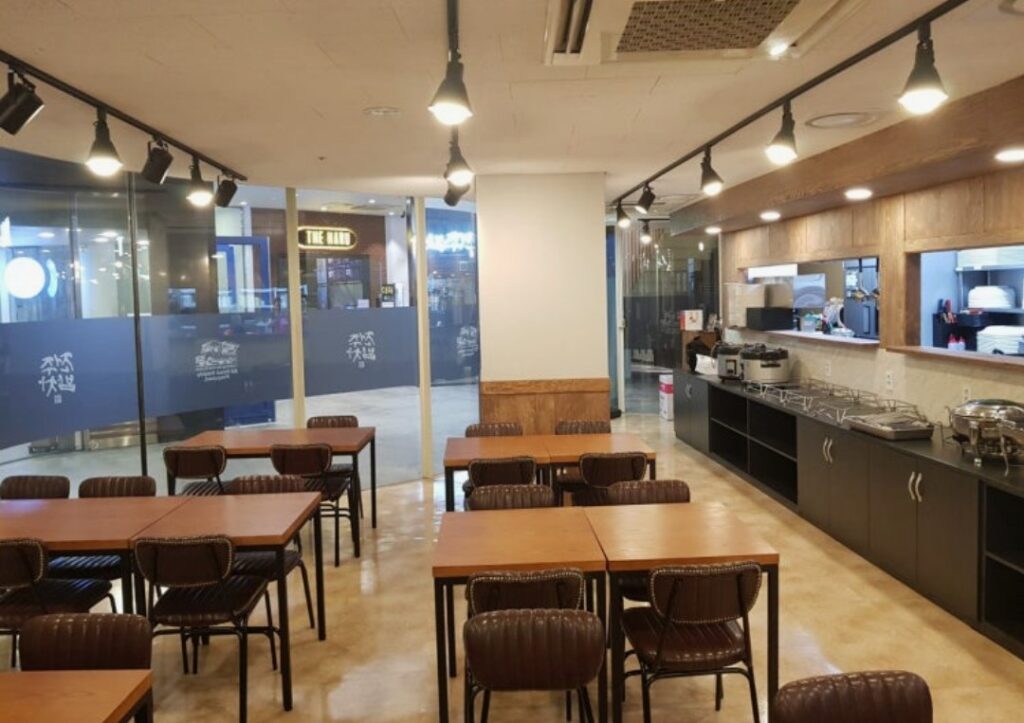
The restaurant has a simple cafeteria-style atmosphere similar to places where local office workers eat lunch.
It is not a fancy restaurant, but the buffet table is well organized and the
dining area is clean.
Despite the affordable price, the food is neatly prepared and offers a satisfying variety of dishes.
Korea has many Korean buffet restaurants, and each place has its own flavors and specialties. At this restaurant, dishes such as bulgogi, spicy pork stir-fry (jeyuk bokkeum), and bibimbap are especially popular.
Visitors can also enjoy the food with fresh wrap vegetables, which makes the meal feel lighter and balanced.
The cabbage salad is particularly refreshing and is often recommended before the meal because it helps make the stomach feel comfortable.
Local Buffet Etiquette
One important etiquette in Korean buffet restaurants is not wasting food.
Visitors are encouraged to take only as much food as they can finish. Taking small portions first and returning for more if needed is considered good manners.
After finishing the meal, customers usually return their plates and leftover food to the dish return station, often called the tray return area.
This system helps keep the restaurant clean and is part of everyday dining culture in Korea.
Best Time to Visit
Korean lunch buffets are especially busy during office lunch hours.
Most Korean companies have lunch between 12:00 PM and 1:00 PM, so the restaurant can become very crowded during that time.
A recommended time for visitors is around 11:00 AM, just before the lunch rush begins. This allows you to enjoy the buffet comfortably and is also perfect if you want to eat a meal that feels like a late breakfast and early lunch.
Please note that the restaurant has a break time from 2:00 PM to 4:30 PM, so lunch service usually ends before the break begins.
Opening Hours
Mon – Fri
10:30 AM – 7:00 PM
Break Time
2:00 PM – 4:30 PM
Last Order
6:30 PMSaturday
10:30 AM – 2:00 PMSunday
Closed
Nearby Attractions in Jongno
• Visit Jongmyo Shrine to explore one of the most important royal shrines of the Joseon Dynasty.
Watch the Royal Ancestral Ritual Ceremony at Jongmyo Shrine in Seoul – Traditional Cultural Performance You Can See Live
• Visit Gwanghwamun Square to walk through one of Seoul’s most famous public spaces.
Watch Free Public K-Pop Dance Performances at Gwanghwamun Square – Open Street Shows in Seoul
• Visit Gyeongbokgung Palace to explore the largest royal palace of the Joseon Dynasty.
Visit Gyeongbokgung Palace – Hanbok Rental, Night Opening & Royal Guard Changing Ceremony
• Visit Bukchon Hanok Village to explore traditional Korean hanok houses and one of the most famous historic neighborhoods in Jongno.
Best Things to See in Bukchon Hanok Village – 8 Must-Visit Scenic Photo Spots in Seoul
• Visit Ssamziegil in Insadong to explore a unique shopping complex filled with art shops and handmade crafts.
8 Best Cultural Experiences in Insadong Seoul – Must-Try Traditional Things to Do
• Walk along Jongno One-Day Street to enjoy a travel route connecting historic landmarks and local restaurants.
Jongno 1 Day Walking Itinerary (2026 Guide) – Palaces, Street Food & Hidden Local Spots
More Places to Eat in Jongno
• Visit Gwangjang Market to try famous Korean street foods such as bindaetteok and mayak gimbap.
Top 5 Gwangjang Market Street Foods – Must-Try Korean Food in Seoul
• Visit a traditional Korean restaurant to try a bulgogi lunch set, a classic Korean meal served in Jongno for over 30 years.
Best Korean BBQ Lunch Near Gyeongbokgung Palace – 30-Year Local Bulgogi Restaurant in Jongno
• Visit a local Korean BBQ restaurant to enjoy pork galbi and samgyeopsal together, a popular and affordable Korean barbecue meal in Jongno.
$15 Korean BBQ in Jongno Seoul – Pork Galbi and Samgyeopsal Best Value BBQ
• Visit a dakgomtang restaurant to try warm Korean chicken soup.
Best Restaurants Near Gyeongbokgung – Healthy Korean Chicken Soup with Ginseng in Seochon Jongno
• Visit a tteokbokki restaurant to taste Korea’s spicy rice cake street food.
Must-Try Korean Tteokbokki Set Near Gyeongbokgung Palace – Local Street Food Within Walking Distance in Jongno Seoul
• Visit a local coffee shop in Jongno to enjoy Korean café culture.
Budget Americano Near Gyeongbokgung Palace – $1.50 Coffee (2,000 KRW) in Jongno Seoul
• Visit Daiso Jongno here to pick up cheap travel essentials before exploring Seoul.
Cheap Things to Buy in Jongno Seoul Travel Supplies & Everyday Items
Practical Information
✔ Google Maps Location
👉View Jeonju Bapcha Location & Walking Directions on Google Maps