Quick Info
Admission: Adults ₩1,000 (about US$0.75)
Free Admission: Under 24, Seniors (65+), Hanbok Visitors, Veterans, People with Disabilities
Opening Hours: 09:00–21:00 (Closed Every Monday)
Night Opening: Open Until 9:00 PM
Royal Guard Changing Ceremony: 11:00 AM & 2:00 PM (Approx. 15 Minutes, Closed Mondays)
Recommended Visit: 1.5–2 Hours
✔ Google Maps
👉 Click the link below to get directions from your current location to the Deoksugung Palace ticket office at Daehanmun Gate.
Introduction – 조선말기~대한제국 시작 덕수궁
Looking for a palace that tells the story of both Korea’s royal heritage and its modernization?
Deoksugung Palace is one of Seoul’s Five Grand Palaces and the only royal palace where traditional Korean architecture stands alongside elegant Western-style buildings.
After Emperor Gojong proclaimed the Korean Empire in 1897, Deoksugung became the imperial palace and the center of politics, diplomacy, and modernization. Today, visitors can explore centuries of Korean history while enjoying peaceful gardens, beautiful architecture, and the famous Royal Guard Changing Ceremony.
The History of Deoksugung
Originally, this site was the residence of Prince Wolsan, the elder brother of King Seongjong.
During the Japanese invasions of Korea in 1592, many royal palaces were destroyed. King Seonjo later used this residence as a temporary palace, marking the beginning of Deoksugung’s history.
In 1897, Emperor Gojong proclaimed the Korean Empire and transformed Deoksugung into the imperial palace. It became the political and diplomatic center of Korea during the country’s final monarchy and witnessed many important moments in modern Korean history.
Junghwajeon Hall – The Heart of the Palace
The highlight of Deoksugung is Junghwajeon Hall, the Imperial Throne Hall.
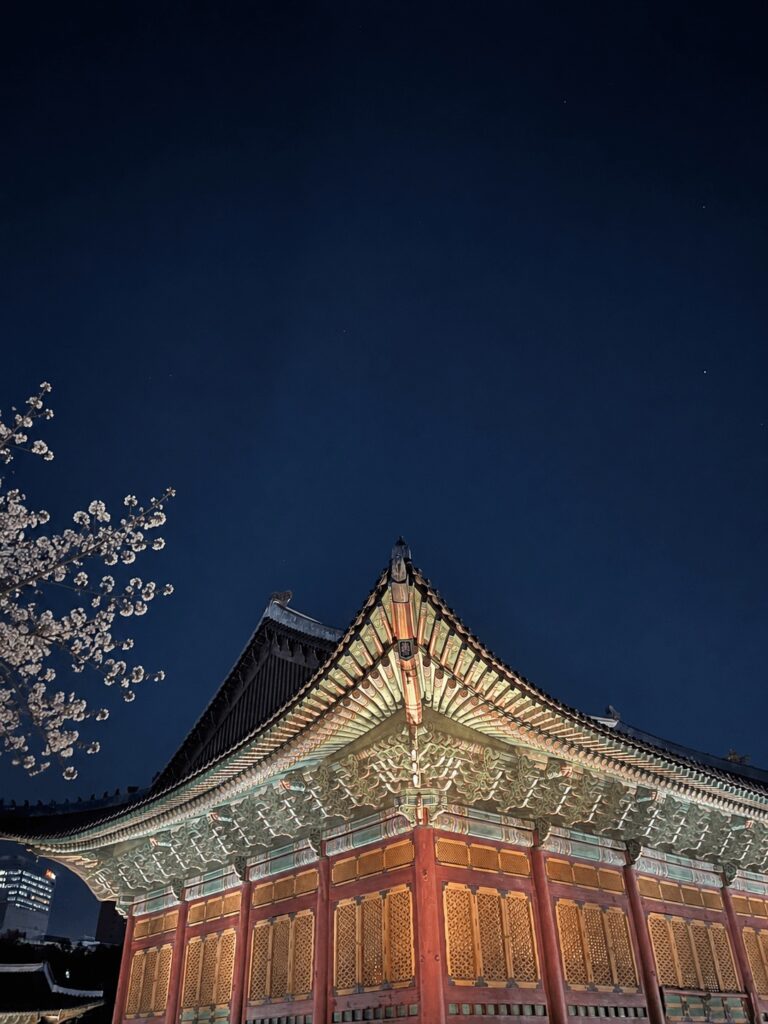
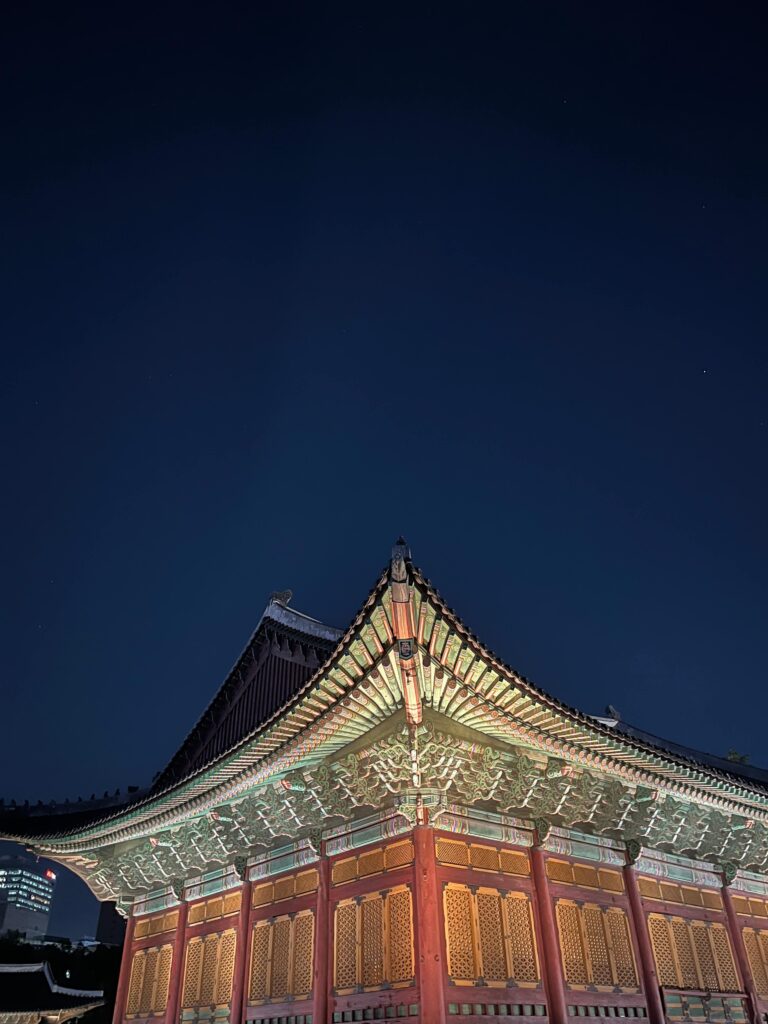
Originally completed in 1902, the building was destroyed by fire in 1904 and rebuilt in 1906. The present hall is the one visitors see today.
Junghwajeon served as the official throne hall where Emperor Gojong conducted national ceremonies, welcomed foreign diplomats, and hosted important state events after establishing the Korean Empire.
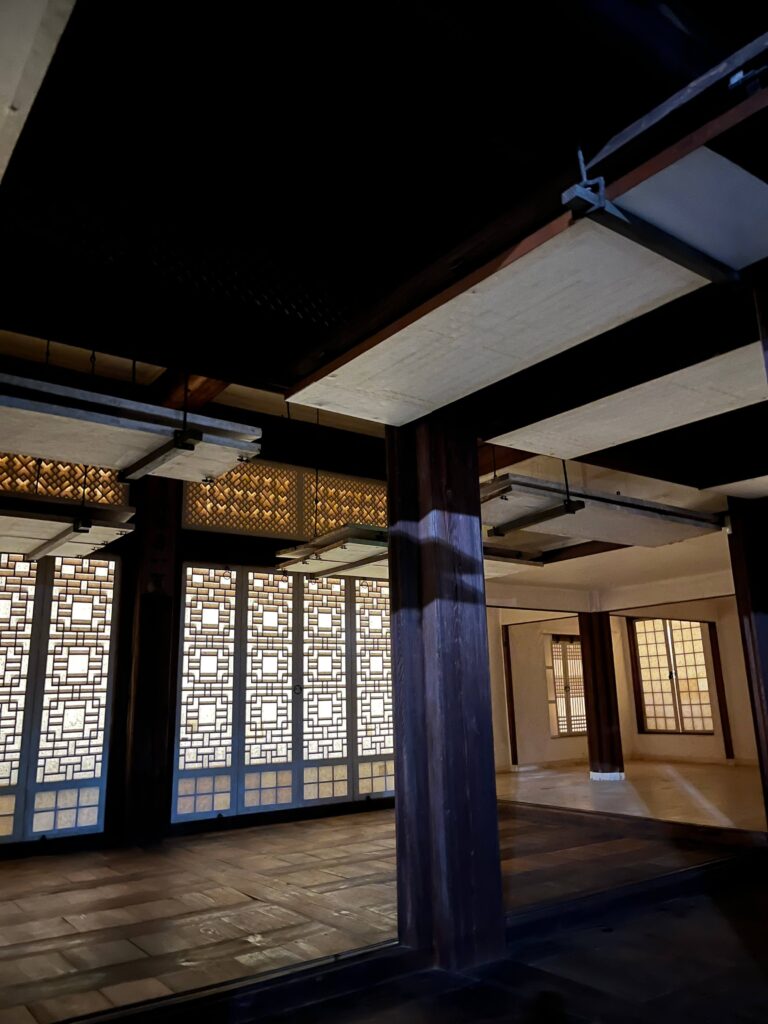
Unlike earlier Joseon palaces that symbolized royal authority, Junghwajeon represented Korea as an independent empire ruled by an emperor.
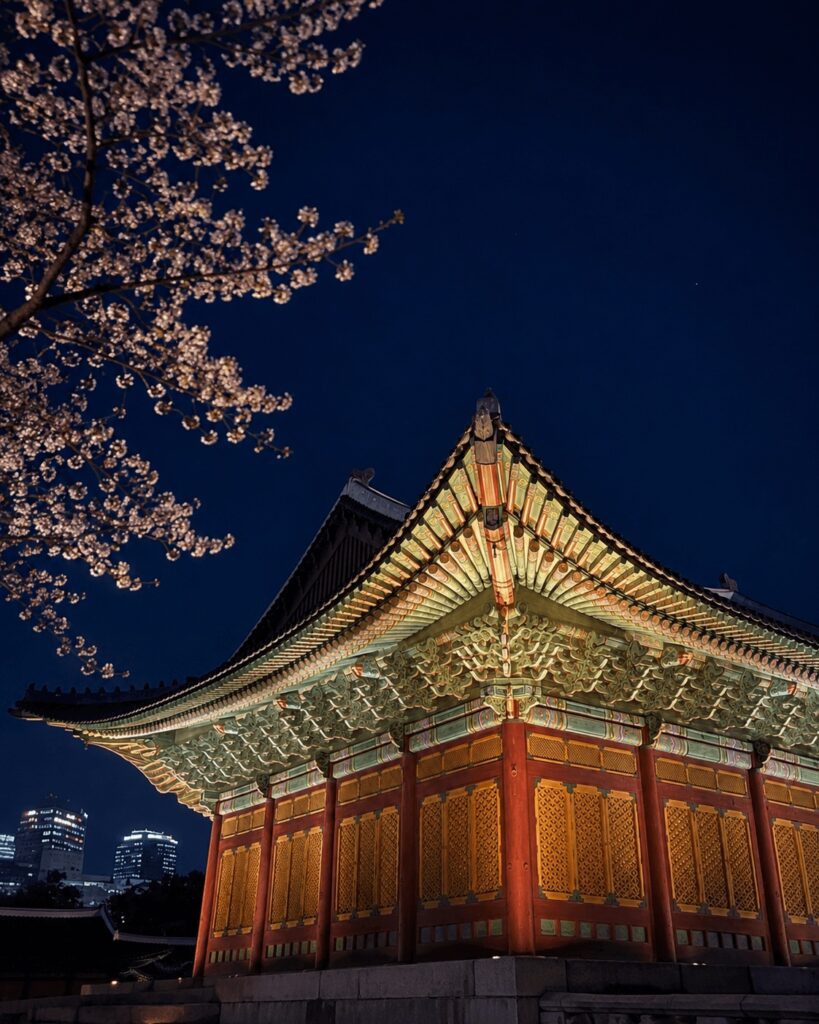
Standing on a high granite platform, the hall features colorful dancheong paintings, elegant wooden architecture, and a spacious ceremonial courtyard.
Visitors can still see the historic rank stones, which marked where government officials stood according to their positions during imperial ceremonies.
Today, Junghwajeon remains one of the finest symbols of Korea’s transition from the Joseon Dynasty to the Korean Empire.
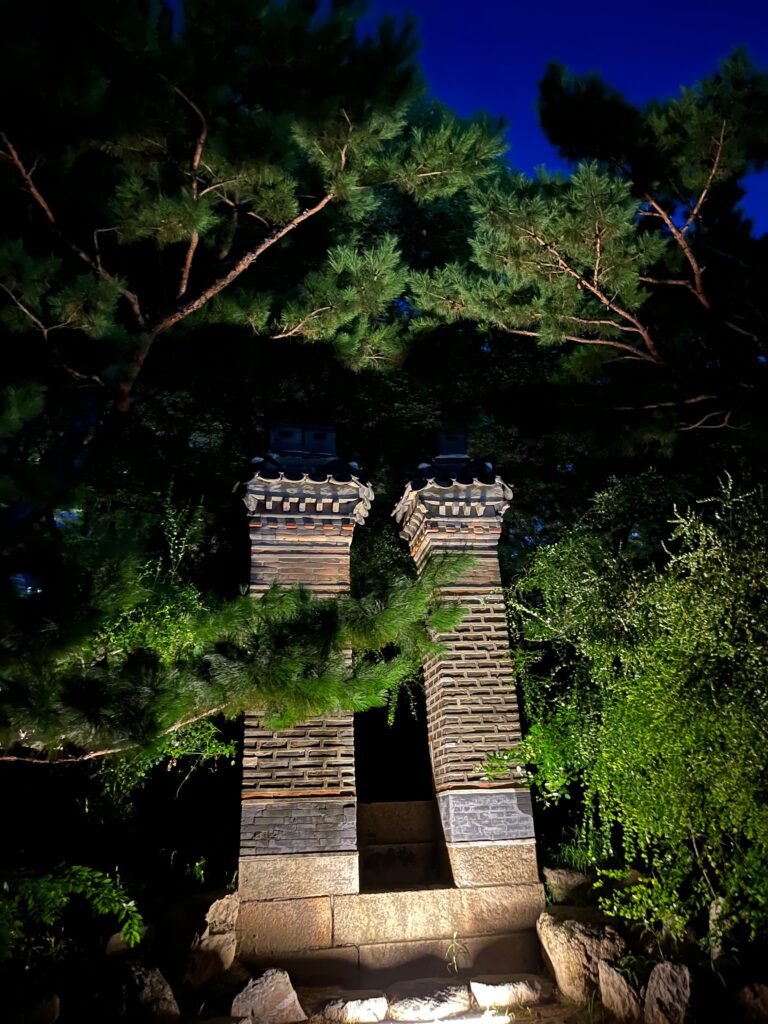
Historic twin brick chimneys in the garden of Deoksugung Palace, illuminated during the night opening.
Korean Empire and Modernization
Deoksugung is much more than a royal palace.
It represents Korea’s efforts to modernize during the late nineteenth and early twentieth centuries.
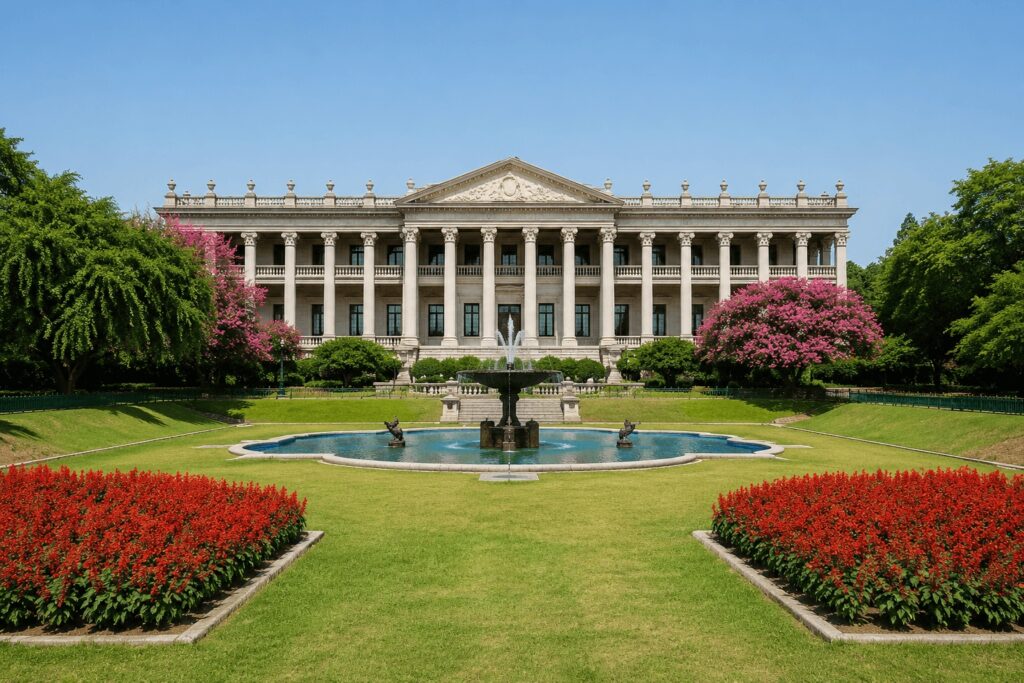
While living here, Emperor Gojong introduced electricity, telephones, Western diplomacy, modern education, and government reforms.
Nearby Seokjojeon Hall, built in European Renaissance style, symbolizes these modernization efforts and remains one of Korea’s most unique historic buildings.
Nowhere else in Korea can visitors experience traditional Korean palace architecture and Western imperial architecture together in one palace.
Royal Guard Changing Ceremony
One of the most popular attractions is the Royal Guard Changing Ceremony held in front of Daehanmun Gate.
The ceremony recreates the traditional changing of palace guards from the Joseon Dynasty with authentic uniforms, flags, and traditional music.
Schedule
- 11:00 AM
- 2:00 PM
- About 15 minutes
- Free admission
- No ceremony on Mondays
Arrive 20–30 minutes early for the best viewing spot.
Travel Tips
- Visit early in the morning for fewer crowds.
- Wear a hanbok to receive free admission.
- Visit during summer to see beautiful crape myrtle flowers around Seokjojeon Hall.
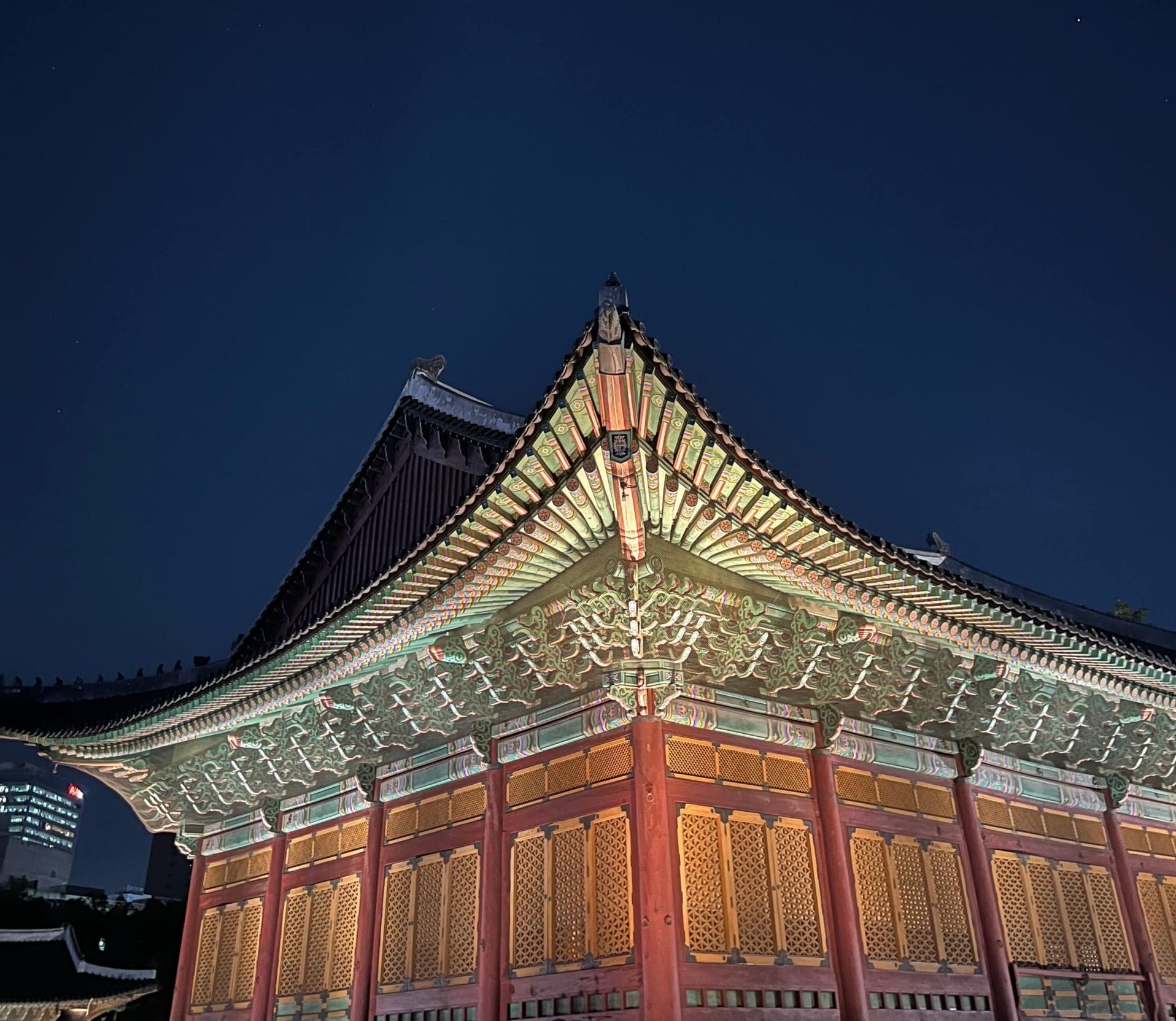
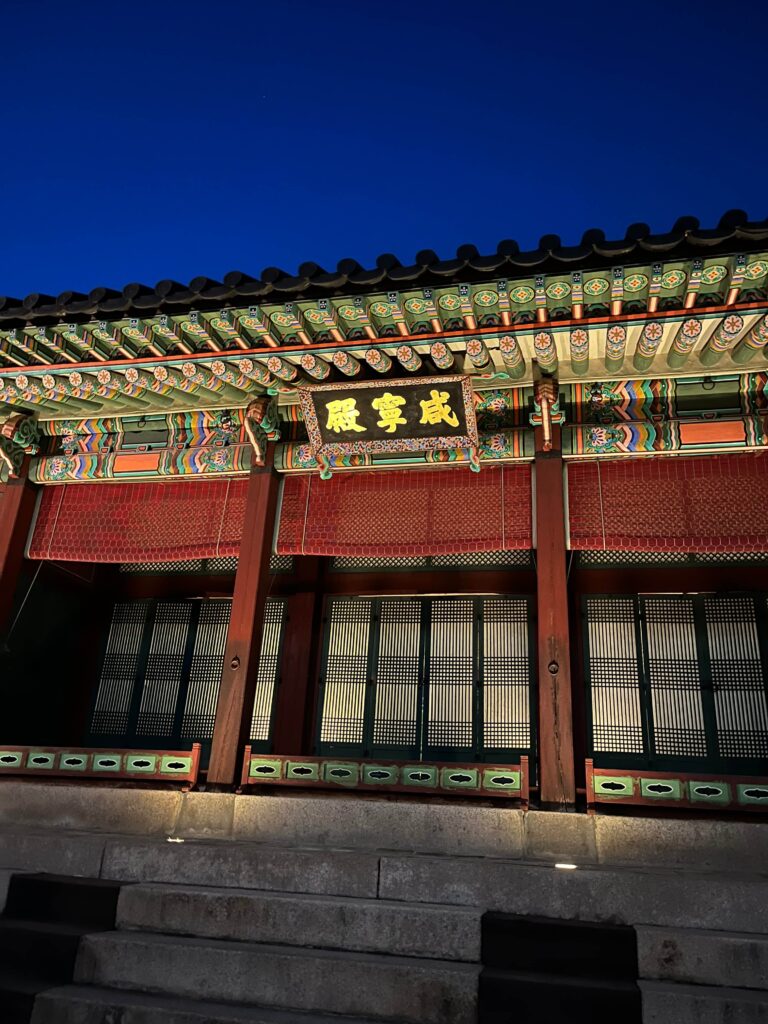
- Stay until evening to enjoy the illuminated palace during the night opening.
- Don’t miss the front view of Junghwajeon Hall, one of the best photo spots in Seoul.
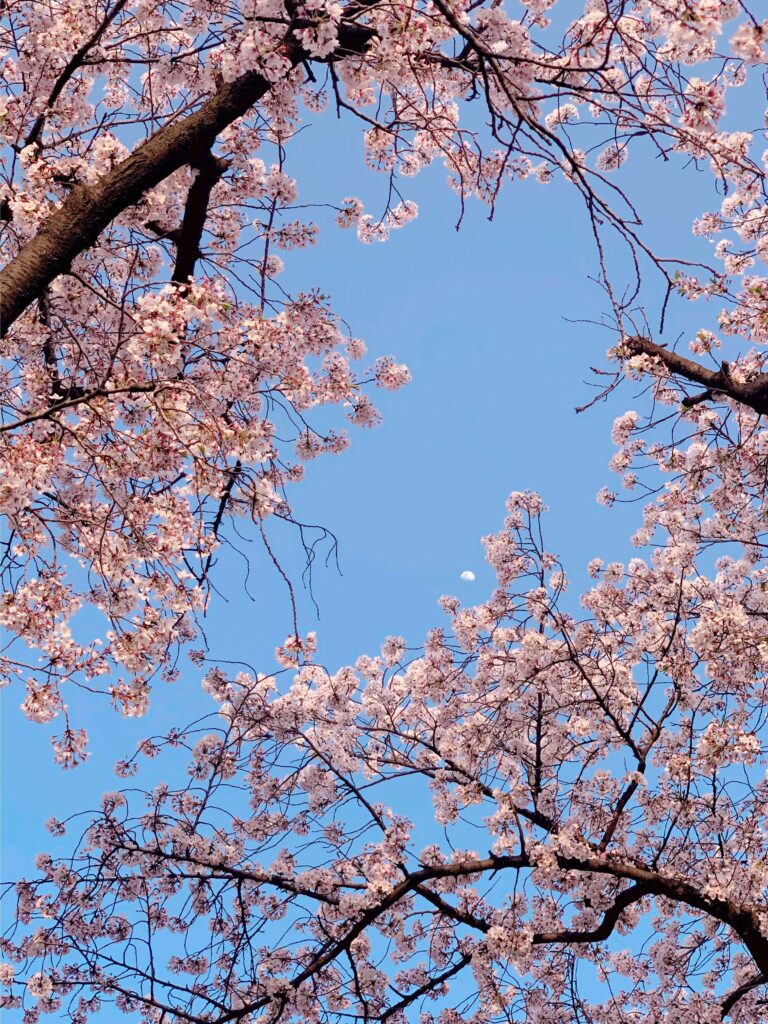
The stone wall road surrounding Deoksugung Palace is one of Seoul’s most famous walking paths. It is especially popular in April when cherry blossoms are in full bloom and again in autumn when the trees turn vibrant shades of red and yellow. The scenic Deoksugung Stone Wall Road has become one of Seoul’s iconic landmarks and has even inspired the famous Korean song “Gwanghwamun Sonata” (광화문 연가).
If you’re planning to visit Gyeongbokgung Palace to experience the grandeur of the Joseon Dynasty, consider adding Changdeokgung Palace to your itinerary as well. Home to the famous Secret Garden (Huwon), Changdeokgung offers a peaceful atmosphere and a unique opportunity to explore the private royal garden once reserved exclusively for kings and the royal family. Together, these two UNESCO World Heritage Sites provide a deeper understanding of Korea’s royal history and culture.
Final Thoughts
Deoksugung Palace is one of the best historical attractions in Seoul, offering visitors a unique opportunity to experience both the royal heritage of the Joseon Dynasty and the modernization of the Korean Empire in one place.
From the magnificent Junghwajeon Hall to the elegant Seokjojeon Hall and the colorful Royal Guard Changing Ceremony, every corner of the palace reflects Korea’s remarkable journey from a royal kingdom to a modern nation.
Nearby Attractions
1. Gyeongbokgung Palace
Experience the largest and most iconic royal palace of the Joseon Dynasty, complete with the famous Royal Guard Changing Ceremony.
Best Things to Do Near Gyeongbokgung Palace – Hidden Food Spots & 1 Day Seoul Itinerary (2026)
2. Changdeokgung Palace & Secret Garden
Discover Korea’s most beautiful royal garden and explore the peaceful Secret Garden, once reserved exclusively for kings.
Changdeokgung Secret Garden Walk – Thing to Do Near Gyeongbokgung Palace
3. Gwangjang Market
Taste authentic Korean street food, shop for local specialties, and experience one of Seoul’s oldest traditional markets.
Best Food in Gwangjang Market – 5 Must-Try Spots Near Gyeongbokgung
4. Jongno 1-Day Itinerary
Follow the perfect walking route to explore Seoul’s top palaces, traditional neighborhoods, markets, and hidden gems in one day.
Best Jongno 1 Day Itinerary – Palaces, Street Food & Hidden Gems in Seoul
5. N Seoul Tower
Enjoy breathtaking panoramic views of Seoul, especially after sunset when the city lights create an unforgettable nightscape.
More Places to Eat
1. Korean BBQ in Jongno – Myeongnyun Jinsa Galbi
Enjoy unlimited Korean BBQ with pork galbi, samgyeopsal, and a wide variety of side dishes at a great price.
$15 Korean BBQ Buffet in Jongno Near Gyeongbokgung Palace – All-You-Can-Eat
2. Ikseon-dong Korean BBQ Restaurant
Experience authentic Korean barbecue in one of Seoul’s most charming traditional neighborhoods.
Best Korean BBQ in Jongno – 3 Must-Try Pork Belly Spots in Ikseon-dong
3. Jongno Pojangmacha Street
Spend the evening like a local with Korean street food, drinks, and a lively late-night atmosphere.
3 Must-Try Pocha Street Spots in Jongno 3-ga – Food, Drinks & Nightlife
4. Dongdaemun Dak Hanmari
Try Seoul’s famous whole chicken hot pot, a must-eat local specialty loved by both locals and visitors.
Best Dakhanmari Near Dongdaemun – 3 Must-Try Korean Chicken Soup Spots
5. Seongsu Fried Chicken – Kkanbu Chicken
Enjoy crispy Korean fried chicken and cold beer in one of Seoul’s trendiest neighborhoods. Perfect for a classic chimaek experience.
Best Korean Fried Chicken in Seoul – Kkanbu Chicken & Chimaek Near Seongsu
Practical Information
Address: 99 Sejong-daero, Jung-gu, Seoul
Nearest Subway: City Hall Station Exit 2
✔ Google Maps
Review
Have you visited Deoksugung Palace?
Share your experience and help other travelers discover one of Seoul’s most historic royal palaces.